
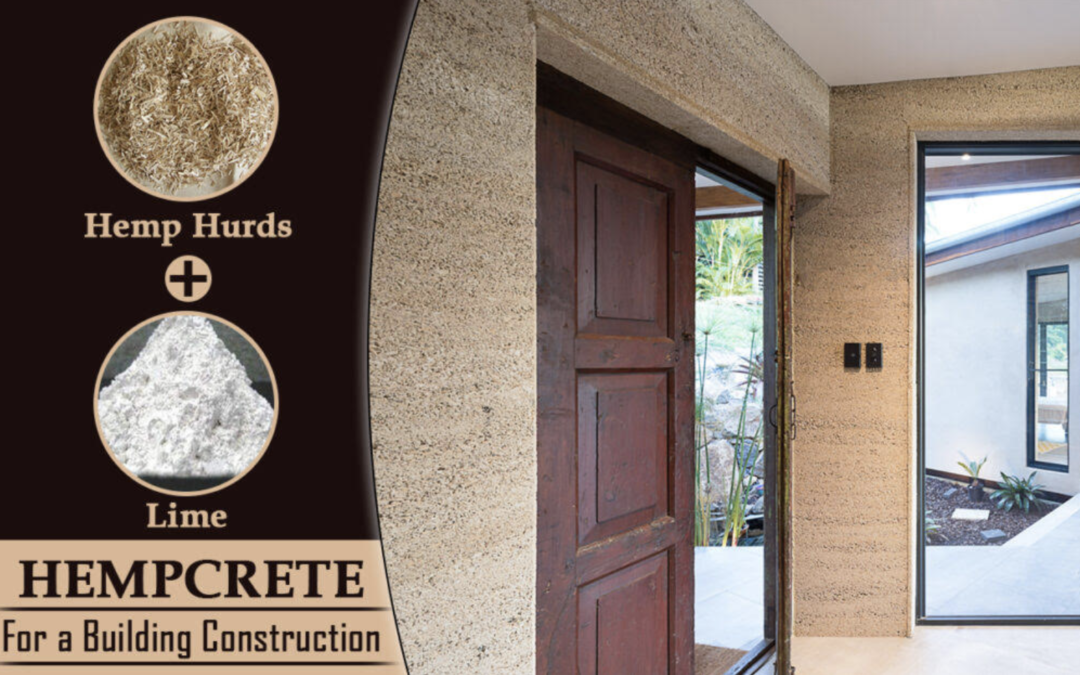
Hempcrete (Hemp-Lime)
Hempcrete, also known as hemp-lime, is an innovative yet ancient & time-tested building material. This is an all-natural material made from the inner woody core of the hemp plant (hurd) combined with lime and water. This remarkable material is an ideal choice for an energy-efficient and resilient building material that has been used around the world for centuries to make Hempcrete structures.
Benefits of Hempcrete
Hempcrete is an eco-friendly building material that offers a wide range of benefits. Hemp is one of the fastest-growing plants on Earth, second only to bamboo. Hemp matures in as little as 75-90 days.
Hemp is an exceptionally sustainable crop, absorbing up to 15 tonnes of CO2 per hectare. When transformed into hempcrete products, the carbon is permanently stored within, making the product carbon negative.
Hempcrete provides excellent thermal insulation, helping to regulate indoor temperatures and reduce energy consumption for heating and cooling by up to 70%.
Hempcrete is lightweight, non-toxic, and resistant to mold, pests, rot, emf’s. hail and fire, making it a safe and durable building product. It also offers excellent noise reduction properties.
Hempcrete helps to detoxify indoor air quality by absorbing chemicals and other pollutants, including wildfire smoke. Additionally, hempcrete’s moisture-regulating properties contribute to healthier indoor air quality by preventing excess humidity. Hemp walls are breathable and vapour open, helping to diffuse moisture and prevent mold issues often seen in conventional homes.
How does Hemprete regulate indoor air temperature and humidity
 1. Thermal Regulation (Temperature Control)
- Thermal Mass Effect:
Hempcrete absorbs and slowly releases heat due to its dense, porous structure.
→ This means it stores warmth during the day (from sunlight or heating) and releases it gradually as temperatures drop at night.
→ The result is stable indoor temperatures and reduced need for heating and cooling systems. - Low Thermal Conductivity:
Hempcrete has excellent insulation value (around R-2.2 – 2.5 per inch or better, depending on mix density).
→ It slows heat transfer, keeping interiors cooler in summer and warmer in winter.
 2. Hygrothermal Regulation (Humidity Control)
- Vapor-Permeable & Breathable:
Unlike concrete or foam insulation, hempcrete walls “breathe.”
→ Moisture can move through the wall instead of getting trapped, preventing condensation and mold. - Hygroscopic Nature:
The hemp shiv (woody core of the hemp plant) naturally absorbs and releases moisture from the air.
→ When indoor humidity is high, hempcrete absorbs it.
→ When the air is dry, it releases it.
→ This maintains a balanced indoor relative humidity (typically between 45–55%), which is ideal for human comfort and respiratory health.
 3. Resulting Benefits
 Consistent indoor climate with less temperature fluctuation
Naturally moderated humidity for comfort and health
Reduced HVAC energy demand (often 30–50% lower)
Mold and mildew resistance due to moisture regulation
Improved indoor air quality (no off-gassing or trapped moisture)
In summary, hempcrete is a versatile, sustainable material that can greatly enhance the environmental performance of building projects from tiny hemp houses to hempwall yurts to full size residential homes and commercial buildings. Our precast hempblocks and hemppanels can be used for buildings in any climate region nationwide.